By Dele Sobowaale

Every great enterprise starts off with enthusiasm for an exalted aim; and ends up bogged down in petty politics— Charles Peguy, 1873-1914, Vanguard Book of Quotations, P. 49
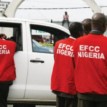
CAN you recollect when the news report that “the EFCC is investigating allegations of N1billion fraud against Governor ABC” would send the governor scampering to the airport for the first flight out of Nigeria? Can you remember when entire States’ Houses of Assembly trembled if Malam Nuhu Ribadu, the first Chairman of the Economic and Financial Crimes Commission, EFCC, merely mentioned that the lawmakers were under investigation? Do you even remember who Nuhu Ribadu is and does it matter anymore? Yet, the first visit of the former EFCC Chairman to Lagos to meet the media created a massive hold-up for hours.
Attached to the EFCC chair must have been armed officers numbering close to two hundred. It was not so much a visit as an invasion. Motorists on the roads, even when parked, received the baleful glare of the gun-toting officers as if they were all suspects in connection with some grand larceny. It was all hype, of course.
But, it was good and necessary hype designed to scare the living daylights out of the most corrupt individuals who President Obasanjo had vowed to deal with in 1999. OBJ might have forgotten his promise because he never sent a bill to create the EFCC to the National Assembly until after he secured a second term in 2003.
READ ALSO:Army arrests 43-year-old woman, two other fake soldiers in Delta
A close look at the list of financial monsters the EFCC had to tackle, once created, included people whose support were needed to get the ticket for the valuable Second Term. In a way, EFCC started as partly a political tool not as a product of principled economic reform agenda. Once launched, however, Nuhu Ribadu shook the Nigerian establishment like nobody had done since Buhari/Idiagbon in 1984-5.
Judging from the rash of announcements and media trials attending the EFCC’s operations from 2004 to 2007 Nigerians expected a repeat of 1984-5 when within a few months no former ministers or governors who had not absconded was seen walking around free.
Nuhu was certainly no Tunde Idiagbon; he just knew how to manipulate the media better. In 2005, he was every newspaper’s Man of the Year. A closer look would reveal that the EFCC secured very few major convictions and only a tiny fraction of the loot taken out of federal and state treasuries were actually recovered. Meanwhile, more trillions of naira were disappearing.
Till today, Nigerians don’t know if $13 or $16 billion went down the drain under OBJ for improved power supply — which never materialised. Still, the appearance of a “tough cop” helped the image of the EFCC — even if very little loot came back. (See PDP: Corruption Incorporated, appendix).
The change of leadership at Aso Rock was not expected to affect Nuhu Ribadu. The national fan club lobbied for his second term, but late President Yar’Adua had other ideas. Nuhu Ribadu was posted back to the Nigeria Police. He even refused to hand over properly to his successor. Files on cases could not be located for months; cases were adjourned and delayed.
This was most unfortunate; because fast and diligent prosecution of the Class of 1999-2007 governors, ministers and other top public service agencies provided the country with the best opportunity to lay the foundation for an effective EFCC — which could have saved the Federal and state governments trillions of naira afterwards.
The dividends of democracy which started 21 years ago should now include increased accountability and transparency, higher per capita income, lower debt burden and far more development than we have experienced so far. Let me quickly explain with three important examples drawn from that book, “How we lost out”.
Incidentally, failure to get the PDP book launched at the time meant that I had to wait for almost three years to recover my investment in writing the book. Plans were already at an advanced stage to publish a second book focusing on corruption at state levels during the same period under review. There were no funds to continue. Entries in the book serve as pointers to how much could have been saved and properly invested for economic and social development.
“I do not see any need for other investigations (especially if it was to be conducted by Ribadu’s EFCC which had already disgraced itself) because this is enough; it speaks for itself that funds were misplaced against the Constitution and against the people of Nigeria” — Chapter 6, Senator Daisy Danjuma, Vanguard, March 4, 2007.
Senator Danjuma was commenting on the findings of the Senate Ad-Hoc Committee which revealed that about N500 billion of PDTF money might have been misappropriated by the Obasanjo administration — with the EFCC providing cover-up instead of apprehending the culprits – including OBJ. The PDTF scams were going on side-by-side with the Power Sector $13-$16billion scandal for which no explanation has been given till today — without any arrest by EFCC.
“That is why we said there were fraudulent motives. Otherwise, why should I enter into a contract with you without seeking a relevant clause to protect my interest and hold you responsible if you did not perform”
— Hon. Lekan Mustapha, Chairman Committee on Communications, Chapter 8.
Mustapha was referring to one of the biggest scandals by any single public official in Abuja — the pillage of NITEL. Not only was Nigeria’s most profitable parastatal handed over to a company based on a fraudulent contract. Pentascope, to which NITEL was handed over, was discovered to have been registered on a public holiday in the Dutch country “with an old church building as its address.” On account of this scam, NITEL lost out on the GSM bonanza from which Airtel, MTN and Globacom now reap billions of naira and dollars every year; and with which they employ hundreds of thousands of Nigerians.
Only four former governors have been successfully prosecuted from the 1999-2007 class. It is remarkable that the fourth one — Orji Uzor Kalu of Abia State — has had his conviction vacated by the Supreme Court. The EFCC will have to start all over again. Over N100 trillion is involved in various cases of public funds embezzled by officials. That is more money than twice what Nigeria is owing at the moment. The EFCC is obviously getting tired; convictions are few and far between. At the rate the crime commission is going, few big money thieves will ever be jailed. Public money appears gone forever. Consequently, Nigeria will continue to borrow only to hand the funds to thieves in public office.
Five years after Buhari rode into office, shouting CHANGE, nothing has changed on corruption. It is actually getting worse.
The post How Nigeria lost the benefits of a strong EFCC appeared first on Vanguard News.
Comments
Post a Comment